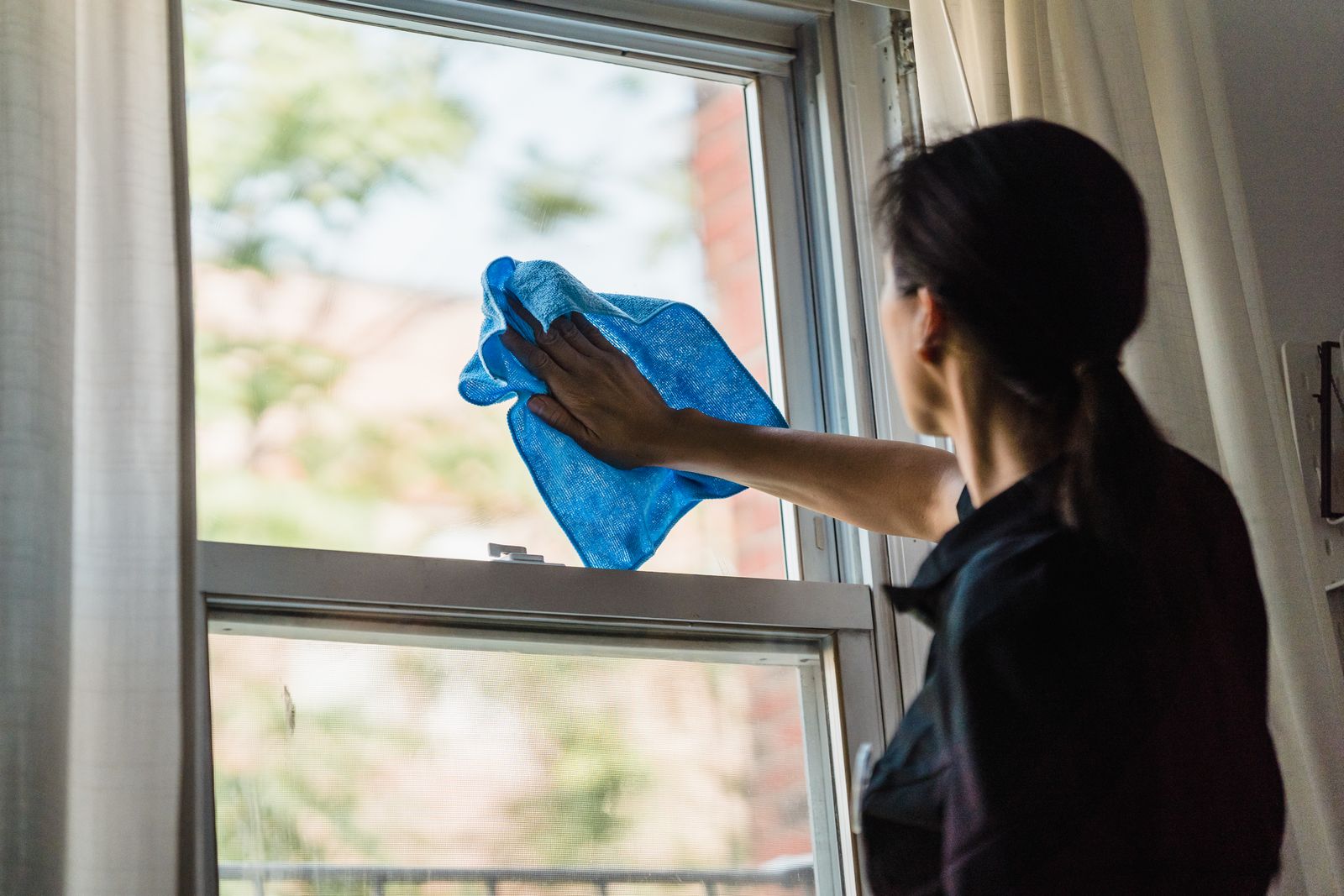
If any pane we cleaned shows a streak, smudge or missed spot within 72 hours, text us a photo. A technician returns within two business days and re-cleans it at no charge.
How we reach the glass, and what has to be certified first
Six access methods, one decision. Before a proposal goes out, a lead walks the elevation and picks the method that gets a technician safely in front of every pane.
Six methods, scroll sideways
Water-fed pole
Reach
Ground to 5 stories (about 55 ft)
Crew
2 technicians
Requirement
No anchorage required
Carbon-fiber sectional pole with a brush head fed by deionized water. We meter the water at the truck and will not start above 10 ppm TDS, because anything dissolved in the rinse dries as a spot.
Right for Mid-rise offices, glass canopies, atrium exteriors, anything over landscaping or a roof we should not load.
Where it stops Pole flex and wind make the top of a 5-story elevation the practical ceiling. Interior glass and heavy mineral staining still need hands on the pane.
Boom lift (MEWP)
Reach
Articulating 45 to 60 ft platform
Crew
2, one certified operator
Requirement
ANSI A92.22 operator card, harness and lanyard in the basket
A rough-terrain articulating boom set on cribbing where ground bearing pressure needs spreading. We stake an exclusion zone under the basket and post a ground person for the whole lift.
Right for Setbacks, courtyards, warehouse clerestories and any elevation with a firm approach for the machine.
Where it stops Needs 10 ft of clear approach, a level pad and overhead clearance from service drops. Street-side booms need a city encroachment permit and usually a lane closure.
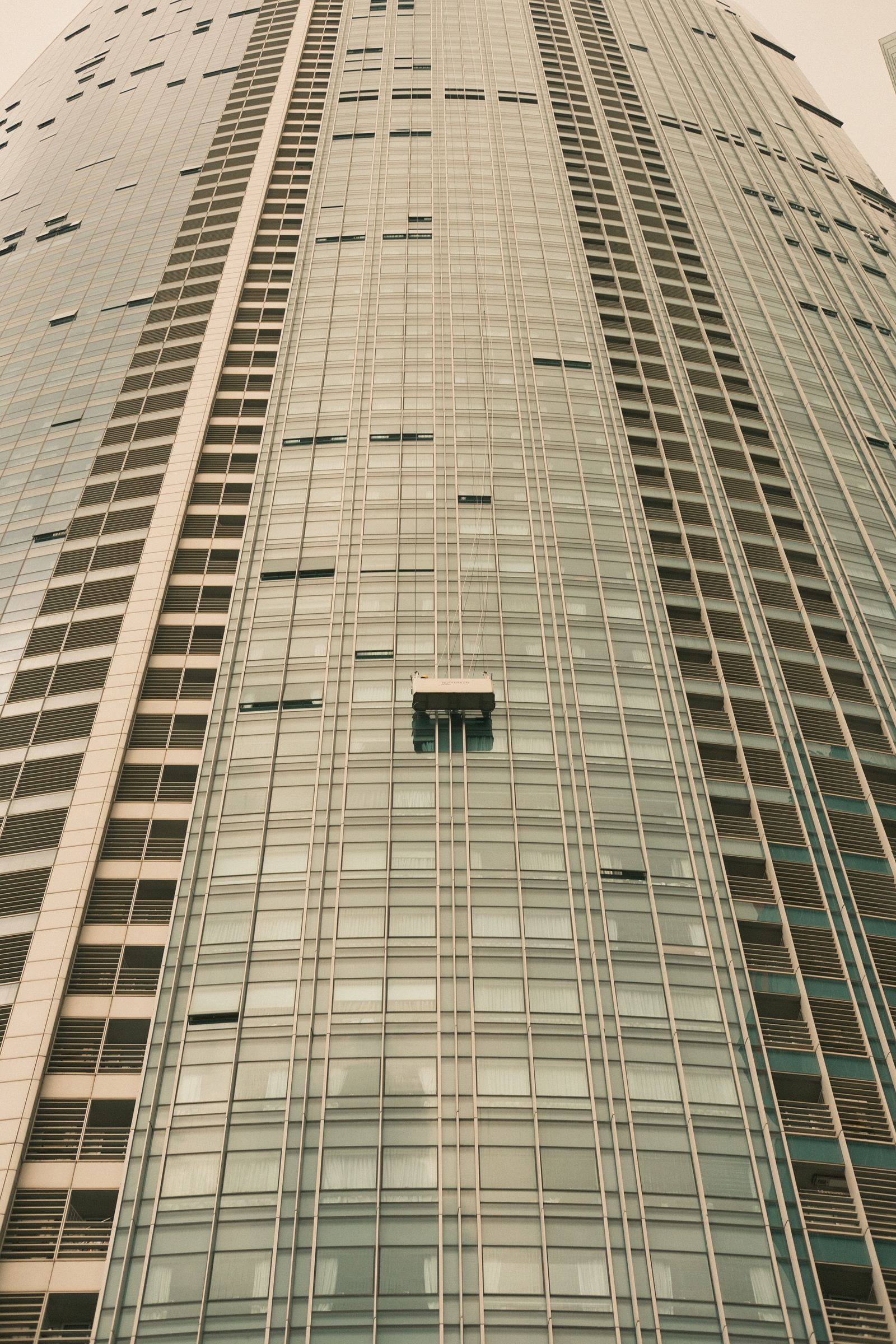
Suspended scaffold
Reach
Full elevation, roof to grade
Crew
3, two on stage plus a rigger
Requirement
OSHA 1926.451, independent lifeline per worker
A two-point swing stage hung from outrigger beams with counterweights and tiebacks. Rigging is inspected and signed off by a competent person before each shift and after any weather event.
Right for Curtain wall, spandrel panels and long uninterrupted elevations where a lift cannot reach.
Where it stops Setup and teardown is most of a day. We stop work at 25 mph sustained wind, which is the limit written into our site plan.
Rope descent (RDS)
Reach
Up to 300 ft per OSHA
Crew
2 rope-access technicians plus rescue
Requirement
OSHA 1910.27(b): 5,000 lb certified anchorages
Bosun chair on a descent line with a separate fall-arrest line on its own anchor. Before we hang, the building owner has to give us written confirmation that every anchorage has been identified, tested and certified within the last 10 years.
Right for Towers with certified roof anchors, tight sites with no lay-down space and elevations a stage cannot be rigged over.
Where it stops No certification, no descent. We will not accept a parapet, a vent stack or a pipe as an anchor, and we carry a written rescue plan for every drop.
Building maintenance unit
Reach
Whole facade, owner supplied
Crew
2 trained on that unit
Requirement
Current inspection certificate held by the owner
A roof-mounted davit, monorail or trolley cradle that belongs to the building. We work to the unit's own operating manual, load rating and inspection interval, and our techs are signed off on that specific machine before first use.
Right for Towers and hospitals that already carry a BMU under their facade-access plan.
Where it stops If the certificate is out of date or the cradle fails our pre-use check, the job stops and the owner's service provider is called.
Ladder work
Reach
Second story only
Crew
2, one footing the ladder
Requirement
Level footing, 3 ft above the landing, 4:1 pitch
Fiberglass extension ladders with standoff stabilizers so nothing rests on glass, gutter or stucco. Stabilizer pads are rubber-faced and we move the ladder rather than reach past our belt buckle.
Right for Residential second stories, small commercial gables and anywhere a pole cannot see the pane.
Where it stops Never on a curtain wall, never on soft or sloped ground, never above two stories. If a ladder is the only way to reach it, it is the wrong elevation for a ladder.
Every commercial proposal ships with a written site-specific safety plan, the certificate of insurance and a rescue plan for any suspended work. Ask for it before you sign anything.
No site visit required for most homes. Here is exactly what happens after you ask for a price.
Step 1
Get your price
Use the estimator or send a few photos. We confirm a flat price within one business day.
Step 2
Pick a time
Choose a two-hour arrival window. We text a reminder the day before and when we are 30 minutes out.
Step 3
We clean every pane
Drop cloths down, screens labeled, glass scrubbed, squeegeed and hand-detailed.
Step 4
Walk it with us
We check the glass with you before leaving. Spot a streak within 72 hours and we return free.
11,460+homes and storefronts cleaned across the valley
The details other crews skip
No upsell for the basics. Every residential clean comes with the full checklist below, whichever package you pick.
Exterior glass scrubbed, squeegeed and edge-detailed
Interior glass with drop cloths and shoe covers
Frames and sills wiped down, inside and out
Screens dusted and reinstalled in the right window
Paint specks and sticker residue razor-safe removal
Final walk-through with you before we leave
Biodegradable, pet-safe solution and pure water rinse
Hard water spots tested and treated on request
Two-hour arrival window with a 30-minute heads-up text
Photos of tracks and sills sent after your visit
Screen bench
Mesh, spline and frames: what actually goes back in the window
Washing a screen is ten minutes. Specifying one is the part that matters. Here is the fabric we carry, what each one costs you in daylight and airflow, and when a frame should be rebuilt instead of rescreened.
Seven mesh types, scroll sideways
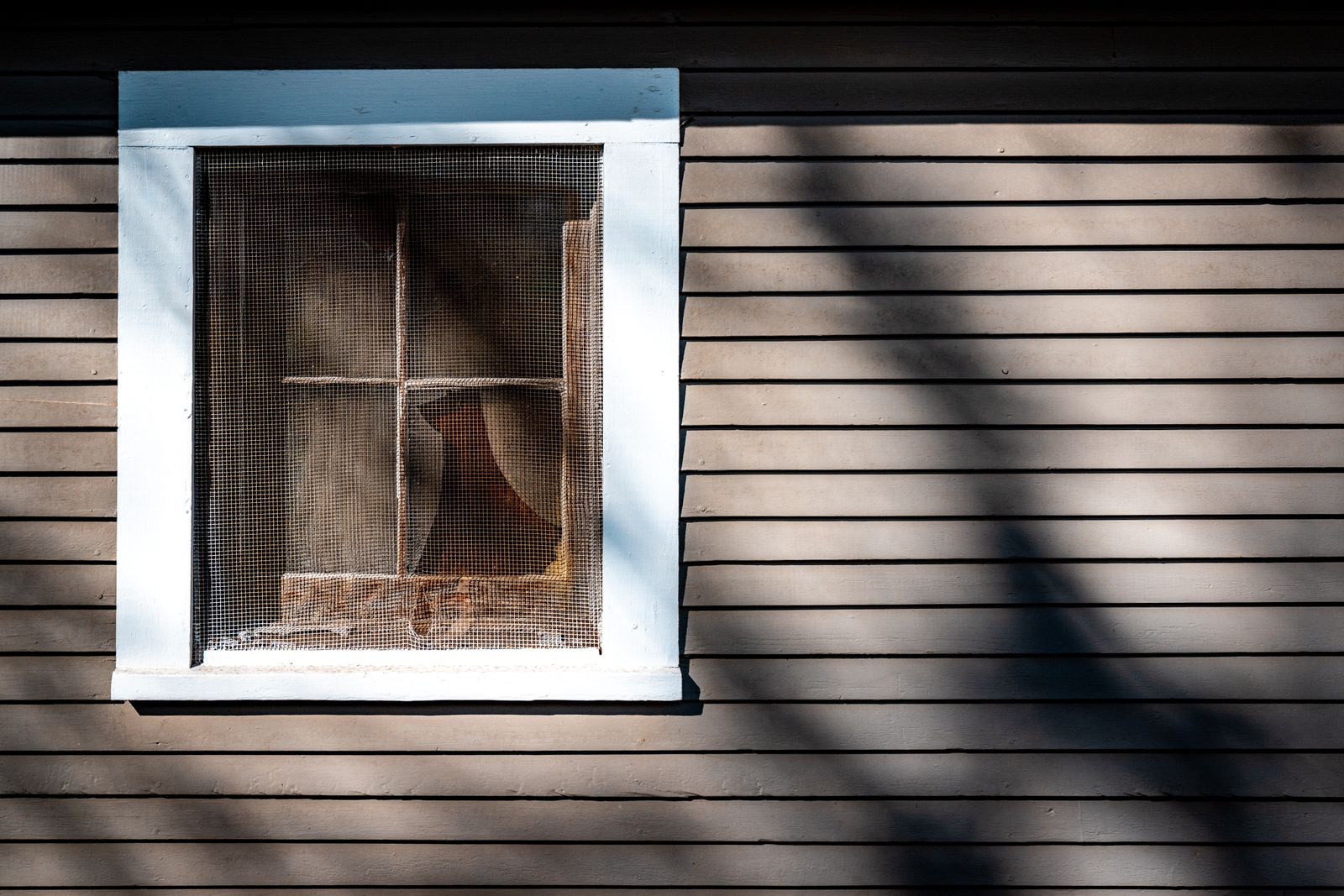
Standard insect
18 x 16 fiberglass
Strand
0.011 in vinyl-coated glass fiber
Openness
About 70% open area
The default replacement for bedroom and living-room screens. Charcoal reads darkest from outside and almost disappears from inside.
Cats. One claw run and the strand deflects permanently.
$34 per screen rescreened, sample price
Claw resistant
18 x 14 pet mesh
Strand
0.023 in vinyl-coated polyester
Openness
About 58% open area
Slider and patio-door screens in homes with dogs or cats. Roughly seven times the tensile strength of standard fiberglass.
Small upper windows where the heavier weave is obvious and the airflow loss is not worth it.
$58 per screen rescreened, sample price
Fine weave
20 x 20 no-see-um
Strand
0.013 in fiberglass, tighter pitch
Openness
About 55% open area
Delta gnats and midges near the river and the canals. Also cuts fine pollen carried in on the afternoon breeze.
Kitchens and any room you rely on for cross-ventilation. It noticeably slows air.
$46 per screen rescreened, sample price
Heat control
Solar screen 80%
Strand
Woven PVC-coated polyester
Openness
Blocks about 80% of solar heat gain
West and south elevations that cook from June to September. Installed outside the glass so the heat never reaches the pane.
View windows you want to look through in the evening. It darkens the room noticeably.
$79 per screen rescreened, sample price
Maximum shade
Solar screen 90%
Strand
Denser weave, same fabric family
Openness
Blocks about 90% of solar heat gain
Bedroom windows that face the afternoon sun and rooms with a west-facing slider on a second story.
North elevations, where you lose daylight for a heat problem you do not have.
$89 per screen rescreened, sample price
High clarity
Fine-thread view mesh
Strand
0.007 in thin-thread fiberglass
Openness
About 78% open area
Picture windows and anywhere the view is the point. The thinner strand scatters much less light than standard 18 x 16.
Ground-floor windows a child or dog leans on. It is a delicate fabric.
$64 per screen rescreened, sample price
Historic frames
Aluminum 18 x 16
Strand
Charcoal-anodized aluminum wire
Openness
About 70% open area
Original mid-century and pre-war frames where a vinyl mesh looks wrong, and tall screens that would sag in fiberglass.
Anywhere it will be pushed on. Aluminum dents and will not spring back.
$52 per screen rescreened, sample price
Rescreening prices are sample figures for a standard 36 x 48 in screen in a sound frame. Frame rebuilds and door screens are quoted per unit.
Six things that decide whether a screen lasts another decade or fails next summer.
Spline sizing
We carry 0.125 to 0.190 in hollow and foam spline. The right size seats with firm thumb pressure, not a mallet. Too large splits the spline channel, too small lets the mesh creep at the corners on the first hot afternoon.
Frame stock
Roll-form aluminum in 5/16, 7/16 and 3/4 in. Sliding-door screens usually need the 3/4 in heavy rail with a mid-rail to stay square.
Corner keys
Corroded or cracked corner keys are the real reason most screens rack out of square. Keys are replaced by size rather than straightened.
Reframe, not rescreen
If a rail is bowed more than about a quarter inch, the corner keys have powdered, or the spline channel is split, new mesh in the old frame will fail again within a season. We say so in writing before we rescreen.
On site or on the bench
Standard rescreens are done on the tailgate the same day. Bent frames, door screens and solar-screen builds go back to the shop and return within three business days.
Labelled and returned
Every screen is tagged by room and window as it comes out, so it goes back into the opening it was cut for. Screens are never stacked on glass.
4.9 from 1,284 reviews
Neighbors who can see outside again
Verified reviews from homeowners, store managers and HOAs across the Sacramento valley.
Scroll sideways for more
Inside & outside windows
Our 1928 house has 64 little panes and they did every one by hand. No streaks, no drips on the sills, and they put the screens back in the right windows.
DODanielle OkaforEast Sacramento, August 2026
Hard water stain removal
Sprinklers had wrecked our sliding door glass. Tomás did a test patch first, then cleared the whole door. Looks like the day we moved in.
RCRavi ChandrasekarRoseville, July 2026
Spring Bright package
Booked online Monday, cleaned Thursday. The crew wore shoe covers, laid drop cloths and sent me photos of the tracks before and after.
MVMaria VillanuevaElk Grove, April 2026
Two-story exterior
Our lake-facing windows are huge and 22 feet up. They used water poles, no ladders on the stucco, and everything dried spotless.
GHGreg HalvorsenFolsom, June 2026
Weekly storefront route
They show up at 6:30 every Tuesday and the doors are clean before we open. The photo log is a nice touch for our owners.
TBTanya BrooksMidtown Sacramento, May 2026
Solar panel cleaning
Panels were coated after a dry spring. Clean process, no soap, and they flagged a loose wire clip for our installer.
LOLuis OrtegaDavis, June 2026
Full Refresh package
Windows, screens, gutters and the patio in one day. Crew of three, very tidy, and they bagged every leaf.
HWHannah WeissGranite Bay, March 2026
Office building, 3 stories
Clear safety plan, tenant notices drafted for us, and the lift work was done before 9 am. Easy vendor to manage.
Every technician is a W-2 employee with benefits and ladder training. Hover or tap a portrait to meet them.
Founder & owner
Marcus Delgado
Started ClearView in 2014 with one ladder and a Civic. Still does the Saturday estimate walk-throughs.
Office & scheduling manager
Priya Raman
The voice on the phone. Priya confirms every quote and keeps arrival windows honest.
Lead technician
Tomás Herrera
Nine years on glass, IPAF lift certified and our go-to for hard water restoration.
Exterior care specialist
Joel Nakamura
Handles gutters, solar and pressure washing, and trains new techs on ladder safety.
Questions before you book
Short answers to what homeowners ask us most. Browse the full FAQ or call Priya in the office, Monday to Saturday.
Most single-story homes with about 20 windows pay $189 to $259 for outside-only cleaning, or $299 to $389 for inside and outside. Two-story homes and French panes cost more. Use our instant estimator for a quick number, then we confirm it before booking.
Most weeks we have openings within 3 to 6 business days. Spring (March to May) books up faster, so we recommend reserving 2 weeks ahead.
Clear sill items and fragile decor, move heavy furniture about 2 feet from windows, and let us know about pets, gate codes or alarm systems. We handle the rest.
If you see a streak, smudge or missed spot within 72 hours, send us a photo. We come back and re-clean that glass for free, usually within 2 business days.
A biodegradable, pet-safe glass solution for traditional cleaning, and deionized pure water for exterior pole work and solar panels. No ammonia and no harsh detergents.
Yes. ClearView carries $2 million in general liability and workers' compensation for every employee. Certificates are available on request.
Sample prices for a single-story home with up to 20 windows. Two-story homes and true divided-light panes are quoted by count.
72hour promise
If you can see a streak, it was not finished.
Text a photo of any pane we cleaned within 72 hours of the visit. A technician is back within two business days and re-cleans it at no charge, with no form to fill in and nothing to argue about. That promise sits behind every package, every add-on and every commercial route.